After months of summer dust, the first good rain reaches Yamhill-Carlton—and in only a few sunny days, the valley begins turning green again.
For most of the summer, the ground around the vineyard tells the same story: brown, dry, dusty, and still. Then the first real rain arrives, and Oregon performs one of its quietest—and most remarkable—transformations.
The dry season most visitors do not expect
People who picture Oregon often picture rain. But here in the Willamette Valley, the stretch from mid- to late May through late August—and often into the middle of September—is remarkably dry. Weeks can pass with no rain at all, or only the smallest trace. Days frequently settle into the mid-80s, with blue skies, warm afternoons, and long golden evenings.
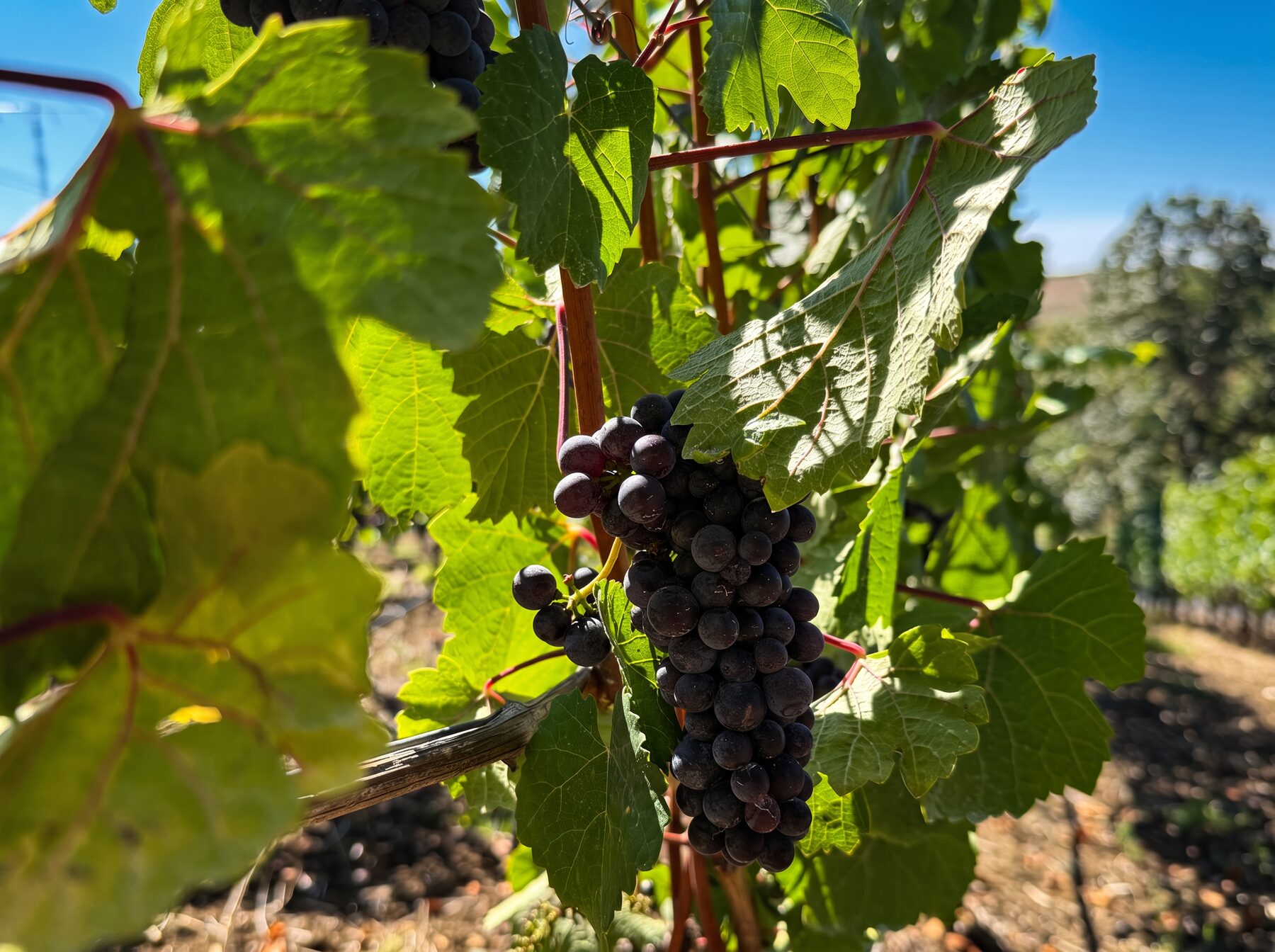
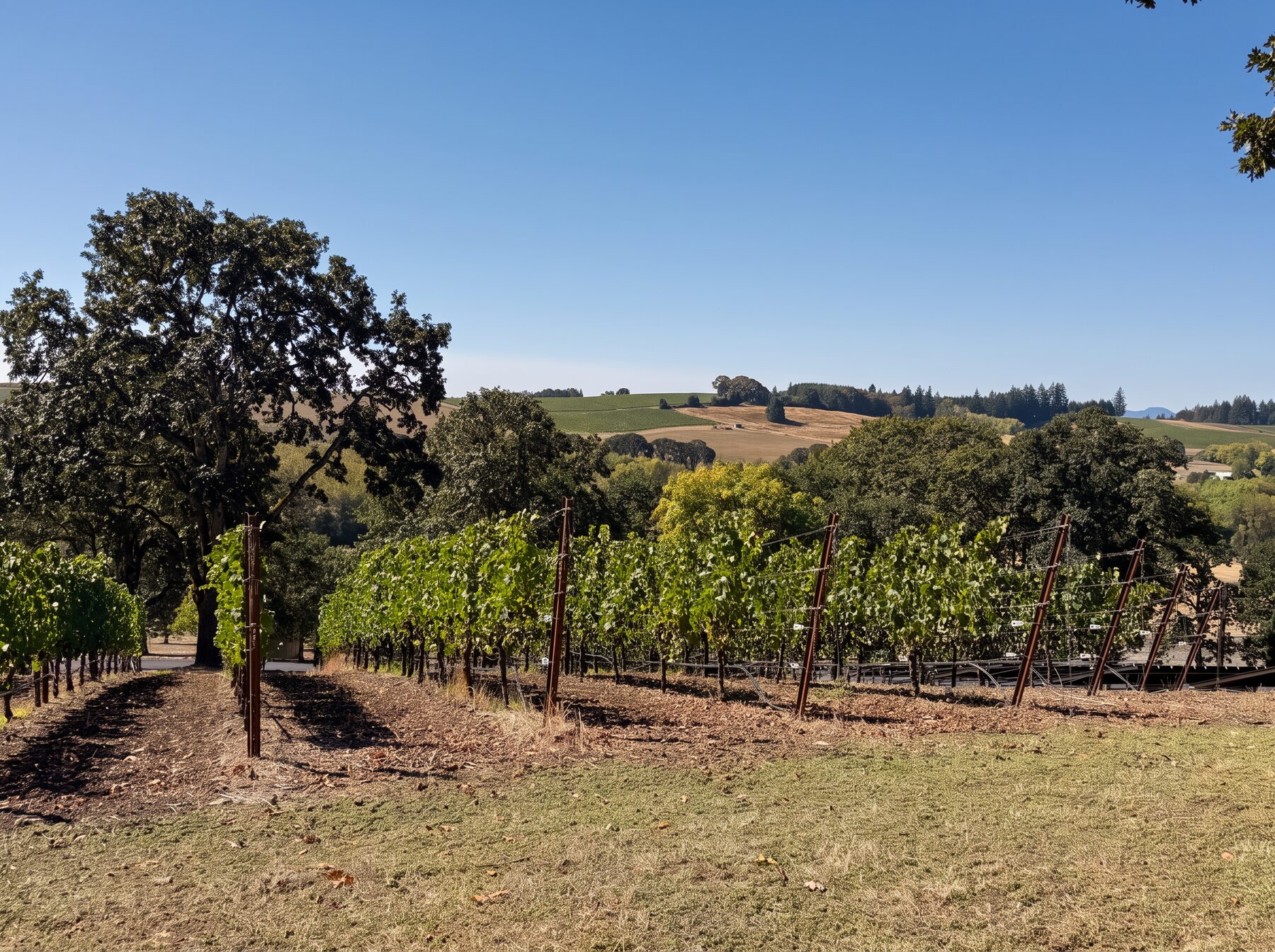
By the end of that season, the grasses around the vineyard have gone dormant. The soil looks parched. Dust gathers along the edges of paths and terraces. The vines remain green, their fruit ripening under the sun, but the landscape beneath them carries summer in shades of straw and brown.
Then came the rain
Last week, after months without meaningful rainfall, we received the season’s first good dousing—somewhere between half an inch and an inch. It was enough.
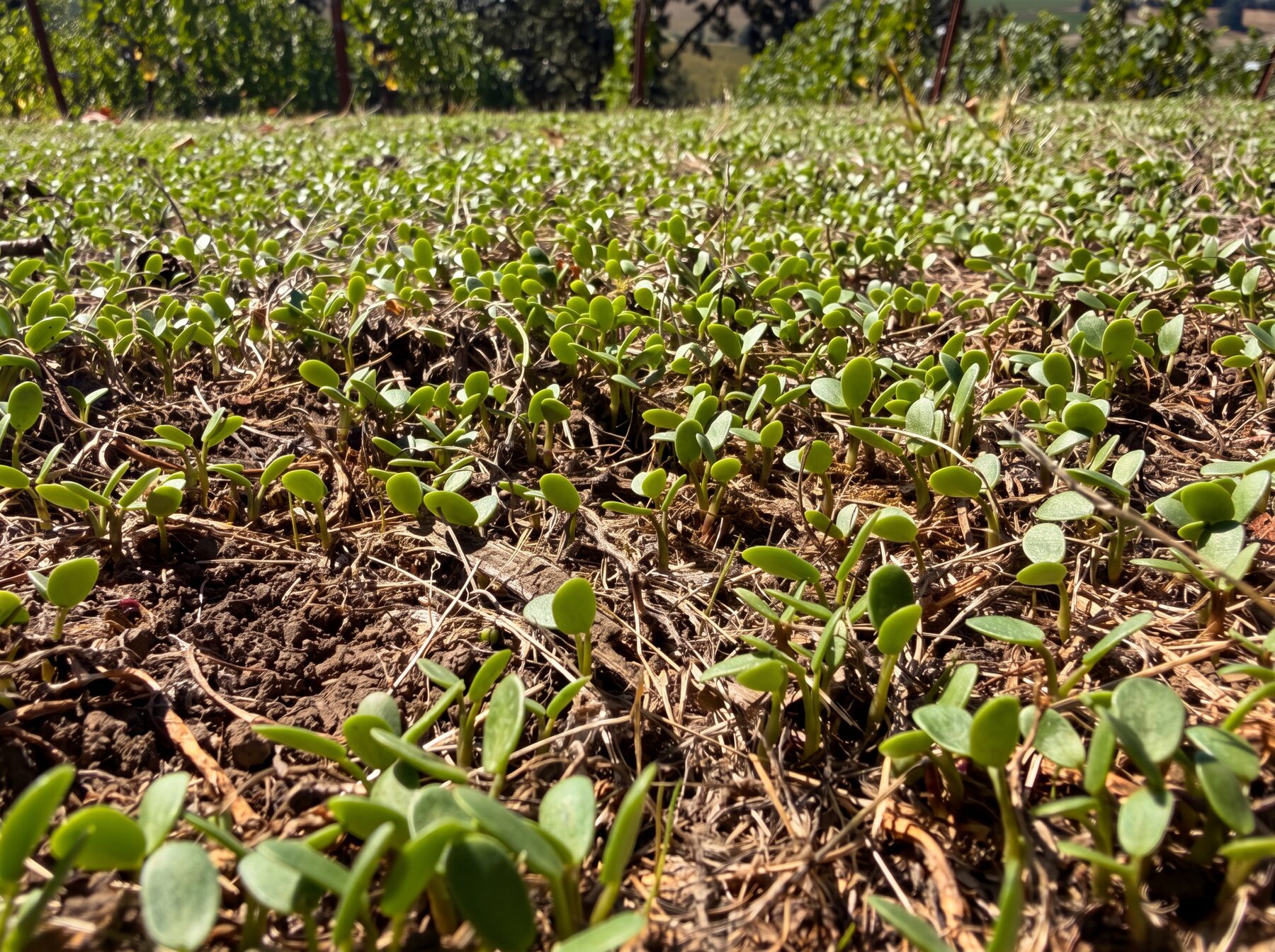
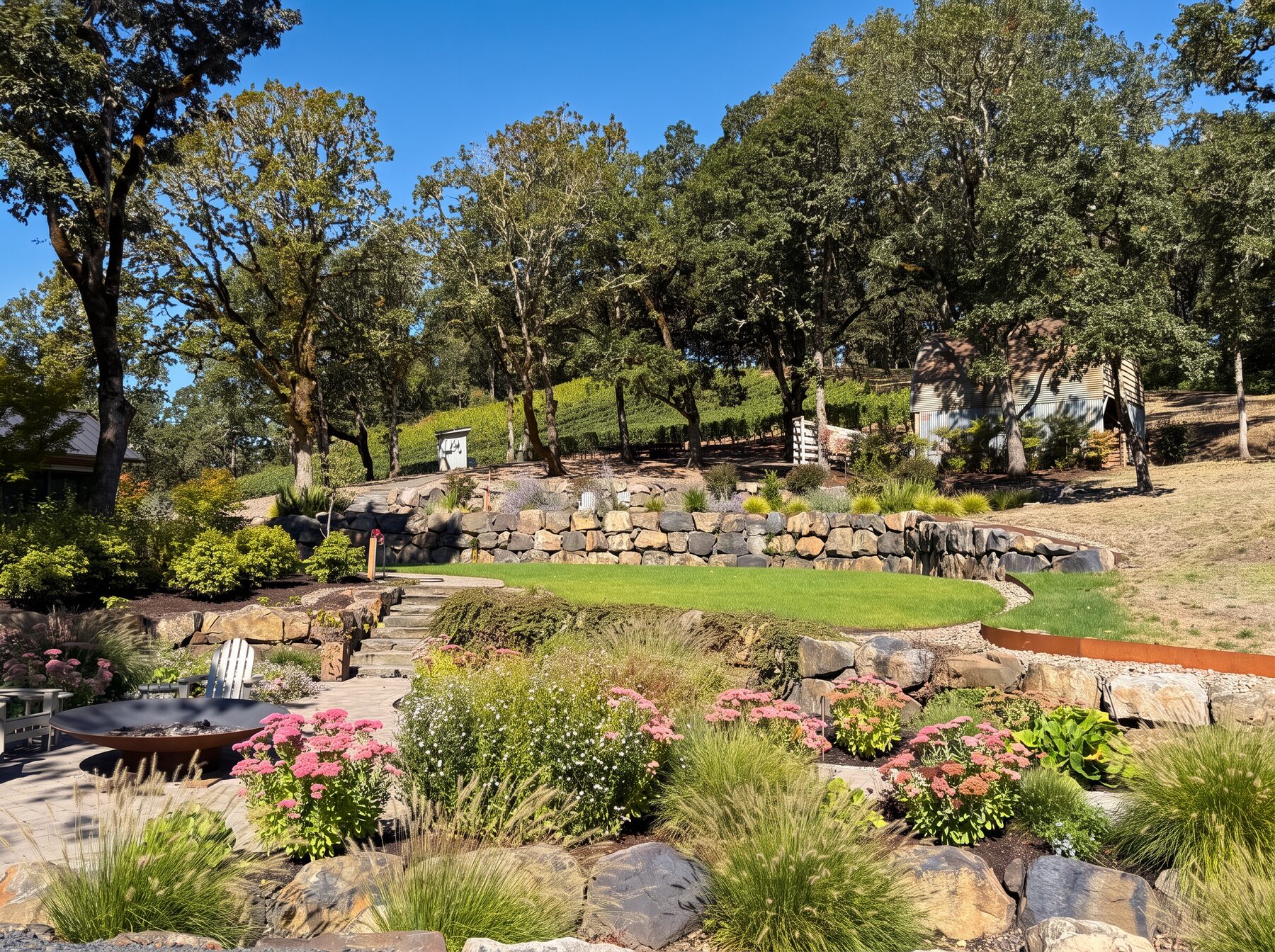
The rain moved through, the sun returned, and temperatures climbed back into the high 70s and low 80s. In just three days, clover and new grasses began pushing through the dry surface. Tiny green shoots appeared everywhere, vivid against the dusty brown ground. From a distance, the lawn and vineyard edges seemed to soften. Up close, the change was even more striking: the earth was awake.
A landscape shaped by air
This is where the name From the Air begins to reveal its double meaning. We will share the valley as it looks from above—vineyard rows, oak-covered hills, changing light, and the geometry of the seasons—but we will also follow the air itself.
Pacific air travels inland through openings in the Coast Range and meets the varied elevations and exposures of Yamhill County. That movement helps create the cool nights, warm afternoons, marine influence, and small local differences we call microclimates. Those patterns shape when rain arrives, how quickly soil dries, where fog lingers, and how grapes develop from one slope to the next.
The first sign of fall
The first rain does not mean summer is over. The afternoons are still warm, the grapes are still hanging, and the vineyard remains bright beneath clear skies. But the new green at ground level is the first unmistakable signal that the season is turning.
It is one of the best times to be here: the warmth of summer, the energy of harvest, and the first renewal of fall all happening at once. In the weeks ahead, we will keep watching from the ground and from the cockpit as color moves across the hills, weather returns to the valley, and the view changes again.
The Valley Wakes Up